Menu
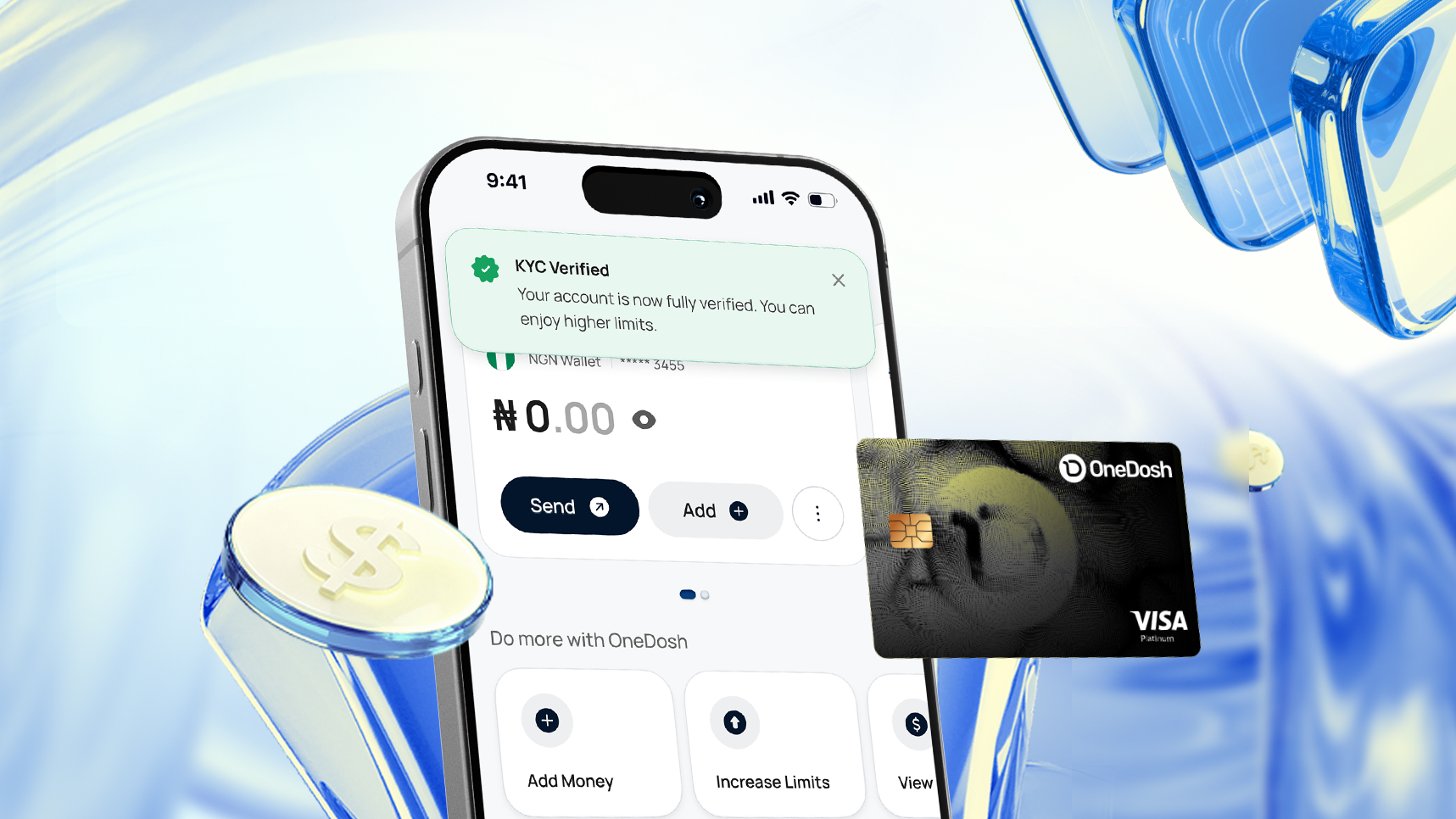
If you’ve ever opened a digital wallet or financial app and been asked to upload your international passport, you may have wondered:
Why do you need all of this information just for me to use an account or move money?
It can feel like an unnecessary extra step, especially when you just want to get started.
But when you’re dealing with money, identity verification is an important part of the process.
That’s where KYC, or Know Your Customer, comes in.
KYC helps financial institutions and fintech platforms verify that their customers are who they claim to be. It is also an important part of efforts to prevent fraud, money laundering, identity theft and other forms of financial crime.
For platforms that support cross-border transactions, these checks are particularly important because money may move between users, financial institutions and jurisdictions with different regulatory requirements.
KYC stands for Know Your Customer.
It refers to the process financial institutions and regulated financial service providers use to verify a customer's identity.
Depending on the institution, country and type of financial service you're accessing, you may be asked to provide information such as:
In Nigeria, commonly accepted identity documents may include an international passport, driver's licence, National Identity Number (NIN)-related documentation or other approved government-issued identification, depending on the institution and its requirements.
You may also be asked for additional documentation, such as proof of address.
So when a financial app asks you to verify your identity, it isn't necessarily asking for information simply because it wants more information about you. Identity verification is part of the infrastructure that allows financial services to operate securely and within applicable regulations.
An international passport is a government-issued identity document that contains identifying information such as your name, date of birth and photograph.
For financial platforms operating across borders, internationally recognised identity documents can also make it easier to establish and verify a customer's identity.
Depending on the verification process, you may also be asked to take a selfie or complete a liveness check. This helps the platform compare the person completing the verification with the identity document provided.
The goal is straightforward: Make it harder for someone to create an account using another person's identity.
This is particularly important in financial services, where a compromised or fraudulent account can be used for activities ranging from unauthorised transactions to other forms of financial crime.
KYC isn't just a compliance exercise. Proper identity verification can contribute to a safer financial environment for everyone using a platform.
If someone attempts to create an account using your identity, verification procedures can make it more difficult for them to successfully impersonate you.
Identity verification is one part of a broader compliance and risk-management system. Financial platforms may combine verified customer information with transaction monitoring and other controls to identify activity that requires further review.
If you ever need to resolve an account-related issue, having verified identity information associated with your account can help the platform establish that you are the legitimate account holder.
Moving money across countries involves more than simply sending money from one account to another. Financial institutions and fintechs have obligations relating to identity verification, anti-money-laundering requirements and other applicable regulations.
KYC helps form part of the compliance framework that supports these transactions.
Cross-border finance introduces another layer of complexity.
You could be living in Nigeria and working with a client in the United States. You could run a business with customers in Europe. You could receive payments from one country and need to spend or convert them in another.
The money may cross different financial systems and regulatory jurisdictions along the way.
That means the platforms facilitating these transactions need to know who their customers are and have appropriate controls in place.
KYC is one of the foundations that makes this possible.
It may feel like a small inconvenience when you're signing up, but it's part of the larger security and compliance framework behind modern financial services.
At OneDosh, identity verification is part of the onboarding process for accessing our financial services.
Depending on your location, product and applicable requirements, you may be asked to provide identification and complete additional verification steps.
The information you provide helps establish your identity and supports the security, compliance and responsible operation of the OneDosh platform.
And while nobody particularly enjoys uploading documents, there's a reason financial platforms can't simply skip the process.
When you're dealing with people's money, knowing who is using the platform matters.
The next time a financial app asks you for your passport or another form of identification, think beyond the extra step.
It's part of a system designed to help financial platforms:
Verify identities.
Prevent fraud.
Meet regulatory requirements.
And support safer financial transactions.
Especially when your money is moving across borders, those things matter.
Ready to get started with OneDosh?
Create your OneDosh account and complete the verification process to get started.
.svg)


.svg)
.svg)